

Jean-Jacques Waltz, known as Hansi, was an Alsatian artist and illustrator whose whimsical, patriotic images of Alsace became iconic symbols of the region's identity — and we discovered his story while wandering the cobblestone streets of Colmar.
A Name on Every Corner
We had been in Colmar for two days before we really noticed him. His name was on a museum, his face on postcards, his illustrations printed on tea towels, wine labels, and the menus of half the restaurants in the old town. Jean-Jacques Waltz — known universally as Hansi — was everywhere, and yet we had arrived knowing almost nothing about him. That changed quickly. Hansi was born in Colmar in 1873, at a moment when Alsace had just been annexed by the German Empire following the Franco-Prussian War. He grew up in a region that was officially German but culturally, emotionally, and linguistically French — a tension that would define his entire life and art.
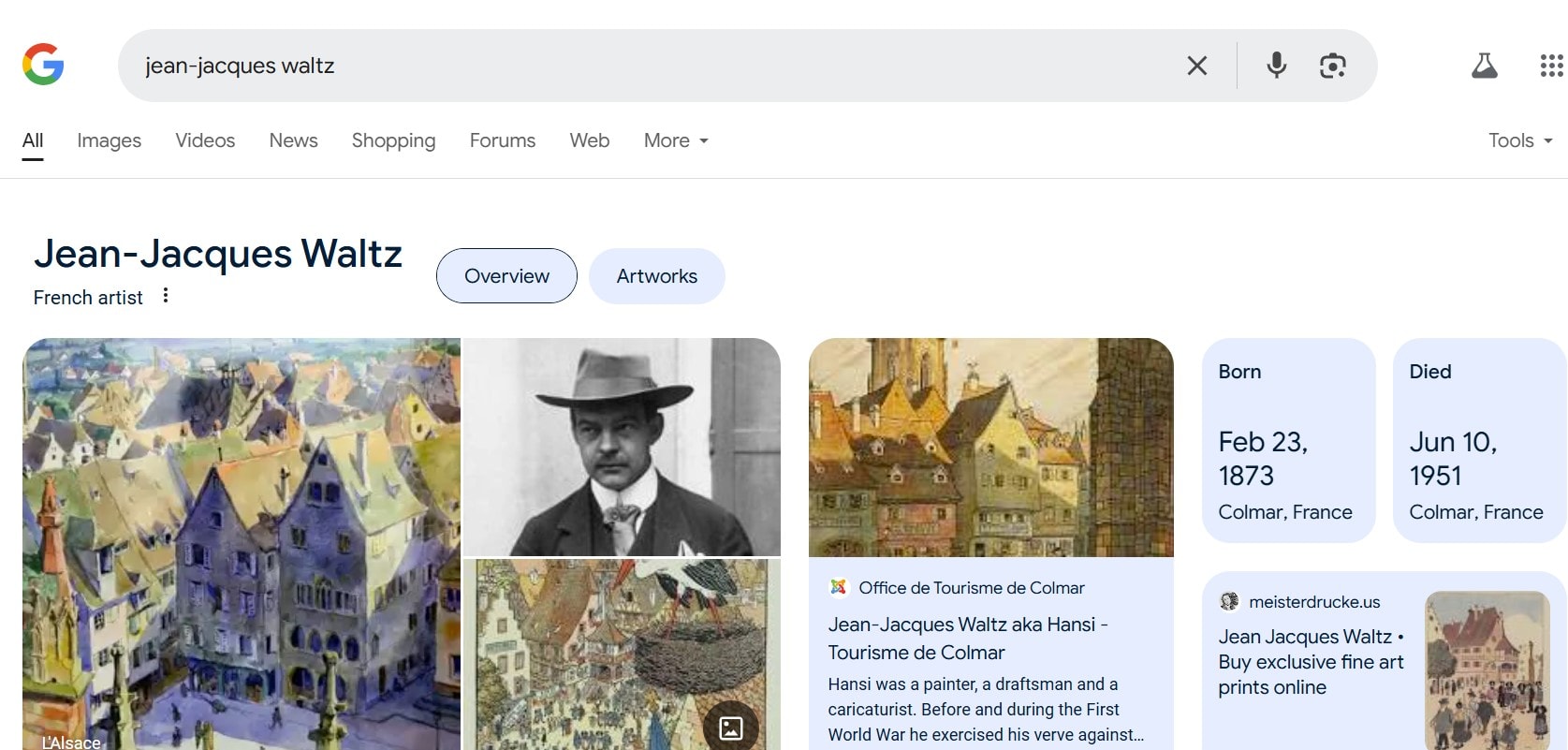
"Hansi's illustrations captured the heart of Alsace — its villages, traditions, and people — in a way that resonated across generations."
Art as Resistance
Hansi's illustrations were deceptively cheerful. His signature style featured rosy-cheeked Alsatian children in traditional dress, half-timbered villages draped in geraniums, and rolling vineyards under soft skies. But beneath the warmth was a pointed political message. His work celebrated French Alsatian identity at a time when expressing it was dangerous. He was arrested by German authorities multiple times, tried for anti-German sentiment, and eventually imprisoned. He never stopped drawing. His most famous book, Mon Village, published in 1913, was a love letter to Alsatian village life — and a quiet act of defiance that resonated far beyond the region's borders.
The Musée Hansi
The Musée Hansi sits in the heart of Colmar's old town, just a short walk from the Petite Venise canal district. It's a small museum by any measure, but it's packed with originals — pen-and-ink drawings, watercolors, book illustrations, and political cartoons that span decades of his career. What struck us most was the consistency of his vision. Whether he was drawing a child picking grapes or a German officer looking foolish, the line work was always precise, the colors always luminous, the feeling always unmistakably Alsatian. We spent nearly two hours inside, which is longer than we've lingered in museums three times its size.
Why Hansi Still Matters
Hansi died in 1951, having lived long enough to see Alsace returned to France after both World Wars. His legacy is complicated in the way that all art born from political conflict tends to be — some of his caricatures are products of their era and don't translate comfortably to modern eyes. But his core body of work endures because it captured something true: the stubborn, joyful persistence of a culture that refused to be erased. Traveling through Alsace, you feel that persistence everywhere — in the dialect still spoken in villages, in the food that blends French finesse with German heartiness, in the festivals that fill the streets each December. Hansi didn't invent that spirit. He just drew it so well that the world could finally see it.

